

Here's something most leadership books won't tell you: the hardest reinvention isn't the one forced on you by circumstance. It's the one where you have to let go of who you decided you were, on purpose, because that version of you no longer fits.
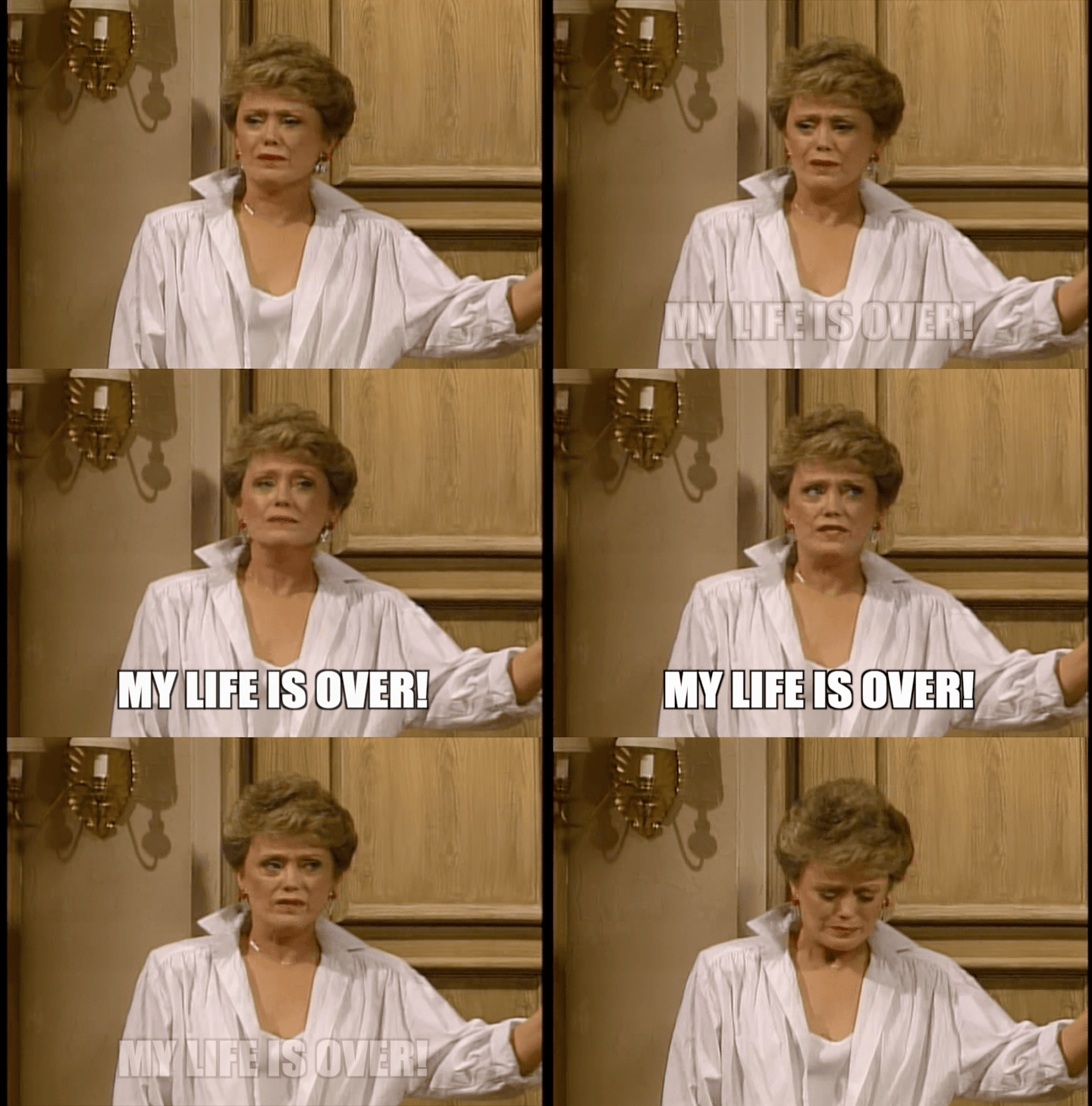
In Season 2, Episode 1 – "End of the Curse" – Blanche Devereaux didn't see it coming. She's nine weeks late and has only just noticed, which tells you everything you need to know about her relationship with denial. She's not pregnant. She's entering menopause. The doctor delivers this news and Blanche comes home, gets into bed, and tells the girls her life is over.
She means it. That's not drama. That's a woman whose entire identity just got the rug pulled out from under it.
While Blanche is processing this in bed, Dorothy, Rose, and Sophia have gone into business together. Specifically, the mink breeding business. They are raising minks in the garage for fur. The minks – named Fluffy, Muffy, Buffy, and, for reasons the episode does not explain, Joanne – are living in the garage and refusing to cooperate. I once sat through a forty-minute workshop on the concept of "productive capacity." I thought about that workshop while watching Dorothy stare at four uncooperative minks, and I thought about the minks during the workshop. Same energy, different setting. The show sets up this parallel between the minks who won't produce and the woman who just found out she can't, and then has the good sense to never mention it out loud.
Here's the thing about Blanche that people miss when they write her off as vain. Her identity isn't built on looks. It's built on desire – on being someone who moves through the world generating heat. That's different. And menopause, to her, isn't a biological event. It's an identity crisis dressed up as a medical one.
The girls eventually drag her to a psychiatrist. In the session she says the real thing: she's afraid of becoming invisible. That Cary Grant got better with age and asks why women don't get the same deal. "Don't say Joan Collins," she adds. "She belongs in a wax museum."
She's not wrong about any of it. I'm a man. I don't face this the same way. But I've sat across from enough women in leadership roles who were brilliant and being quietly sidelined to know that Blanche is describing something real. The expiration date isn't biological. It's cultural. And it's applied selectively.
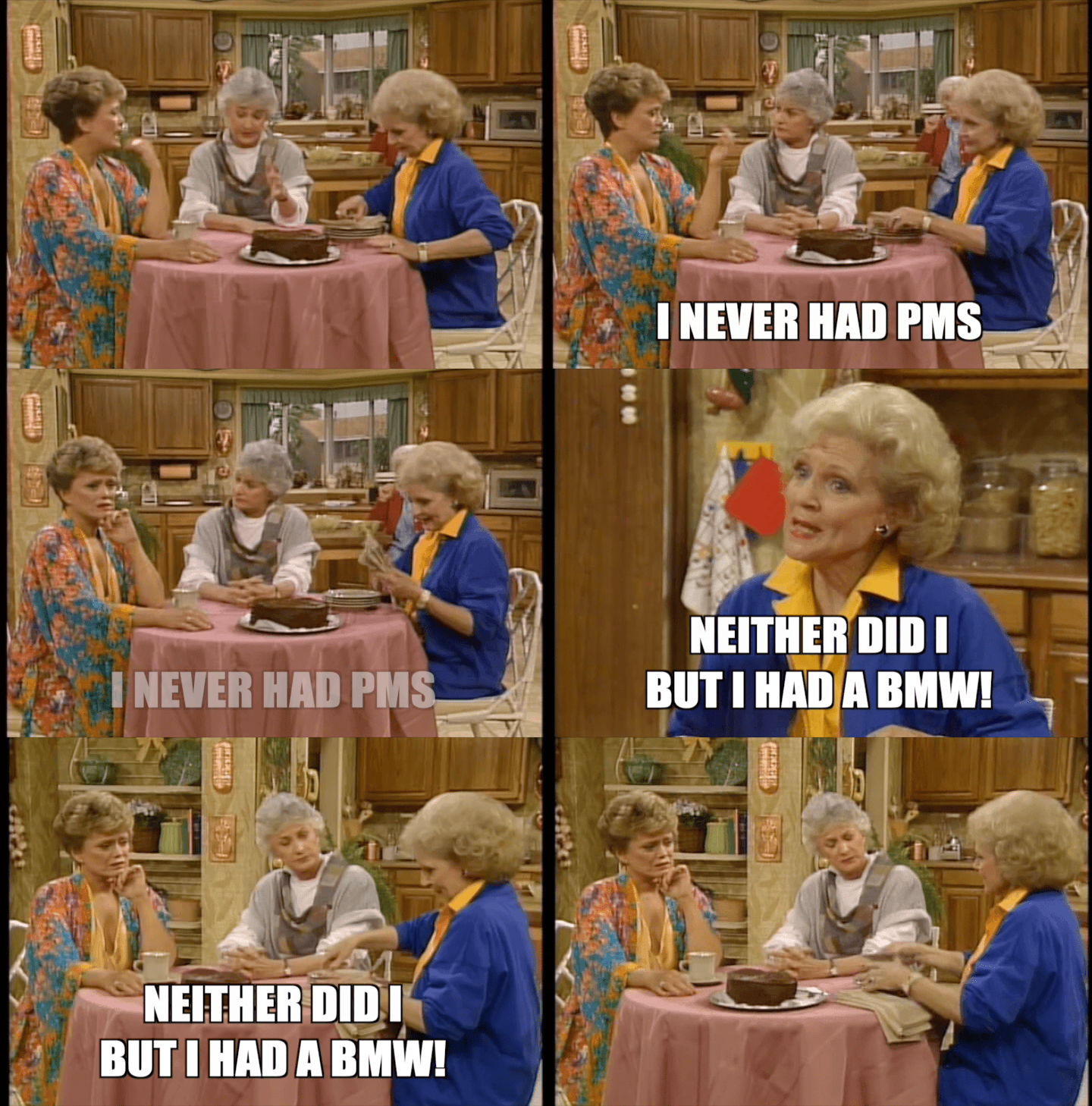
The psychiatrist doesn't fix her. Of course he doesn't. What actually helps is the kitchen table at midnight, where Dorothy says menopause ended her catastrophic PMS and she loved every minute of it, Sophia says she woke up one morning looking like Arafat and apparently moved on, and Rose says she never had PMS but did have a BMW. A red one.
None of this is inspiring. It's just honest. And honesty, it turns out, is more useful than inspiration when your identity is in pieces on the floor.
"I am exactly the same as I was. Because I never saw it as having anything to do with my sexuality."
That's Dorothy. It's the most useful thing said in the entire episode because it reframes the whole problem. Dorothy never tied her worth to being desired. So when the biological clock stopped, she didn't lose anything she was counting on. Blanche tied everything to it. That's why this hurts so much more for her.
Most people do this. They build their identities around something – a role, a reputation, a capability, a version of themselves that works – and then one day it stops working. And instead of grieving it and moving on, they dig in. They perform it harder. They date the mink vet.
Blanche goes on a date with the mink vet and comes home saying she's fine. Whether she is or isn't, the show wisely doesn't say.
At the very end of the episode, two of the minks finally start mating. The girls celebrate. Dorothy points out both minks are male.
I have nothing to add to that.