Why The Golden Girls
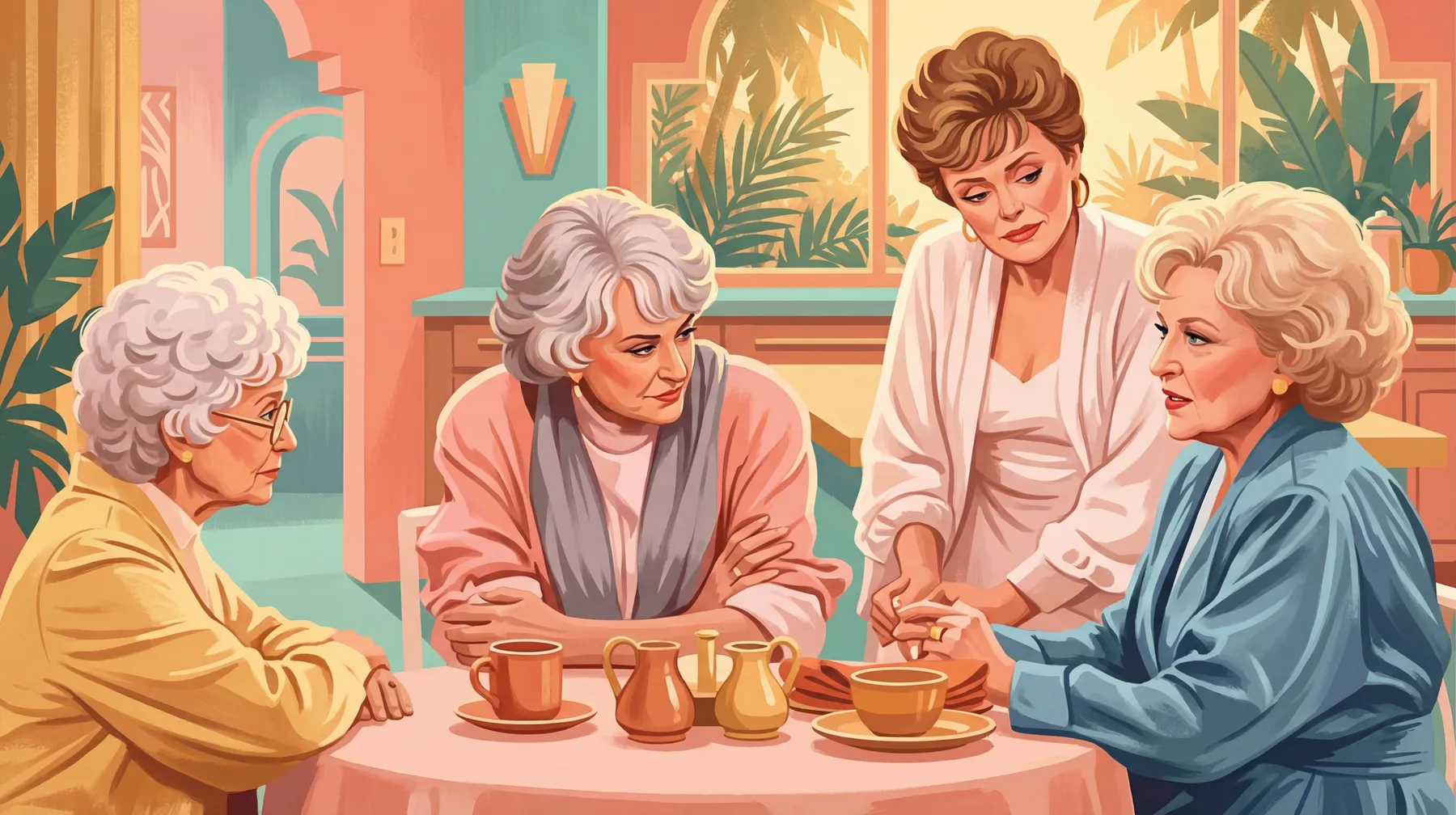
Table of Contents
There is a moment in the second season of The Golden Girls where Rose Nylund – sweet, slow, relentlessly underestimated Rose – takes command of an island.
Not metaphorically. There is a crisis, there is no one else who knows what to do, and Rose steps forward. She leads until the moment her knowledge runs out, and then she hands it back. The whole thing lasts maybe four minutes. Nobody in the episode calls it leadership. It is, without question, leadership.
That's the show. That's always been the show.
The Golden Girls ran for seven seasons, won everything, and has never stopped airing. Most people who love it will tell you it holds up because it's funny, or because the writing is sharp, or because the four leads had chemistry that can't be manufactured. All of that is true. But there's something else going on – something that gets overlooked because it's hiding inside a sitcom about four older women in Miami.
These women lead each other. Constantly. Not because they have titles or authority or a plan. Because they show up, tell the truth, make room for each other, and do it again the next day. The kitchen table at 2am is where the real decisions get made. The cheesecake is incidental.
I have a PhD in Organizational Leadership. I have read the frameworks, taught the models, and sat in enough boardrooms to know what leadership actually looks like versus what it's supposed to look like. And what I keep coming back to – what I find myself reaching for when I'm trying to explain something true about how people actually lead each other – is a scene from a thirty-year-old sitcom.
That's not nostalgia. That's evidence.
The Golden Leadership Model has six pillars. None of them require a title. All of them show up in the show, repeatedly, in specific moments that hold up under real analysis. Dorothy Zbornak is the best truth-teller in the room not because she's mean but because she respects people enough to say the hard thing. Sophia Petrillo leads with complete authority because she stopped caring what anyone thought approximately forty years ago. Rose is chronically underestimated, which is a leadership problem – but it belongs to the people underestimating her, not to Rose. And Blanche Devereaux understands how culture works better than most executives I've met.
This blog exists because the argument deserves to be made carefully, scene by scene, with receipts. Not as a gimmick. Not as a nostalgia trip dressed up in business language. As a genuine case that leadership is human-scale, improvisational, and already happening around you – and that four women in Miami figured that out a long time ago.
The show knew what it was doing. We're just catching up.
